





Dating advice
All articles
Dating apps
Relationship
Tinder
November 6, 2024
How to Rizz a Girl Up: 6 Expert Tips for Instant Charm
Read more 

 Blog
Blog
Being ghosted can feel unexpectedly heavy, even when a conversation felt easy and positive just moments earlier.
One day, there is shared interest, curiosity, and perhaps plans, then suddenly nothing, which leaves space for unanswered questions. That silence often sparks self-doubt, and many men assume they did something wrong without any real evidence.
That reaction makes sense. Humans look for clarity and connection, and dating apps intensify this need by creating quick emotional closeness without much stability. When contact disappears, confidence can take a hit, even if you felt grounded beforehand. Ghosting may be common, yet the impact feels personal each time, which is why it can linger longer than expected.
This article aims to slow the moment down and help you process what happened without turning it into a judgment about your worth. The focus is calm perspective, emotional steadiness, and a way forward that feels considered rather than reactive.

Being ghosted means communication stops without explanation, and that lack of clarity is what makes it unsettling. It can all happen so quickly; there is the initial engagement between you and lots of positive momentum, then all of a sudden, silence replaces it, leaving your mind searching for meaning.
Silence often feels like rejection, yet the two are not the same. Rejection provides information, even if it hurts; ghosting provides ambiguity.
Your mind naturally fills that gap with assumptions, usually negative ones directed inward. Over time, this can quietly wear down confidence, even when nothing specific went wrong. Ghosting reflects avoidance more than evaluation, which is an important distinction. It often says more about someone’s ability to communicate than about your attractiveness or value.
When there is no explanation, the situation can feel unfinished. Unfinished does not mean failure. Viewing ghosting as a lack of response rather than a hidden verdict helps reduce its emotional weight.
People ghost for reasons that feel confusing from the outside, yet most have little to do with deliberate rejection.
Conflict avoidance is common. Some people struggle with disappointing others, so silence becomes a way to avoid an uncomfortable conversation.
Overwhelm and option overload appear frequently in app-based dating. Multiple conversations compete for attention, and follow-through fades, sometimes without much intention.
Limited emotional communication skills can leave people unsure how to express uncertainty or declining interest in a respectful way, leading them to disappear instead.
Timing matters as well. Stress, personal upheaval, unresolved attachments, or low emotional availability can quietly pull someone out of a connection.
In many cases, ghosting reflects avoidance or overload rather than evaluation. Seeing it as a behavior choice rather than a judgment helps reduce self-blame.
Being ghosted often triggers emotional responses that feel automatic, especially when there was emotional openness or momentum.
These responses are human. Naming them clearly helps reduce their intensity and supports emotional recovery.
Handling ghosting in a healthy way begins by slowing your internal response rather than reacting from the initial emotional spike.
This approach builds emotional steadiness and reduces the chance of reactions you later regret.
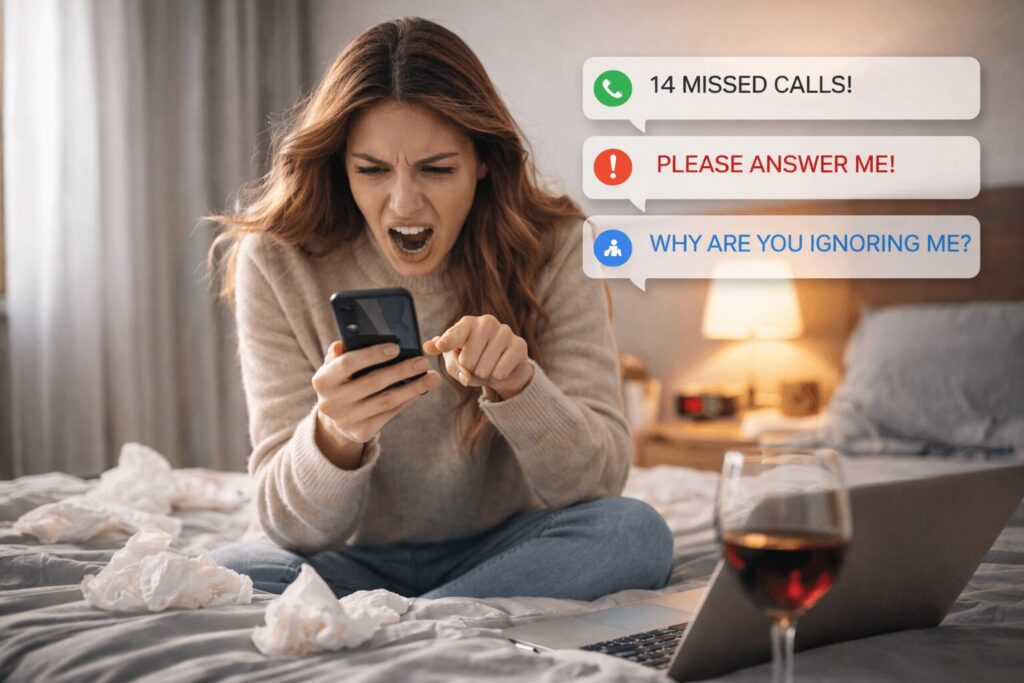
After being ghosted, certain reactions feel automatic, yet they often increase emotional strain rather than resolve it.
Letting go of these habits protects self-respect and prevents one experience from shaping future dating choices.
Rebuilding confidence starts by separating your sense of self from a single outcome, even when it felt personal. One unanswered conversation does not erase your character, attractiveness, or emotional depth, yet the mind often treats it that way. Confidence weakens when it relies on external validation and strengthens through self-trust.
Focus on what remains within your control, such as honesty, curiosity, and respectful communication. These qualities exist regardless of how someone else behaves. Viewing dating interactions as practice rather than proof helps shift perspective. Confidence tends to return through repetition of healthy actions rather than immediate reassurance.
Showing up again, even cautiously, reinforces resilience. When progress is measured by steadiness instead of outcomes, confidence becomes quieter and more durable.
Boundaries reduce the emotional cost of dating by helping you notice misalignment earlier. Clear communication about interest, pacing, and expectations sets a tone of mutual respect. When effort feels one-sided, that imbalance is information, not something to explain away.
Pay attention to early patterns such as vague plans, delayed replies, or frequent rescheduling, since these often continue. Boundaries are not about controlling outcomes. They protect emotional space.
Choosing to step back when clarity is missing preserves confidence and limits unnecessary rumination. Treating your time and attention as valuable makes it easier to release situations that lack consistency.
Ghosting can sometimes provide clarity through absence, even if it feels unsatisfying. When someone disappears instead of communicating, it often signals limited emotional availability. Silence can be information, showing a lack of capacity or willingness to engage consistently.
Seeking closure from someone who has already withdrawn usually deepens frustration rather than easing it. Closure does not always come through conversation, and waiting for it can keep you stuck.
Choosing to move on is not giving up. It is responding to what is present rather than what you hoped might develop. Letting go creates space for connections built on presence, clarity, and mutual effort. Acceptance does not dismiss your feelings. It reflects trust that consistency matters and that your confidence deserves steadier ground.


 Take this 2-min test
Optimize your profile
Get better dates
Take this 2-min test
Optimize your profile
Get better dates 
Join 304,617+ happy users