



Dating advice
All articles
Dating apps
Relationship
Tinder
November 6, 2024
How to Rizz a Girl Up: 6 Expert Tips for Instant Charm
Read more 

 Blog
Blog
Tinder often looks easy to follow, yet many men swipe daily and still struggle to turn matches into conversations or dates. Results can feel unpredictable, and users often assume success depends on luck or appearance alone.
In reality, Tinder works more like a system where profile quality, engagement and messaging style shape outcomes. Small changes to photos, bios and conversations often improve match rates quickly.
This Tinder dating guide explains how Tinder works, why matches fluctuate and what strategies improve results. You will learn how to build a stronger profile, start better conversations and move matches toward real dates.

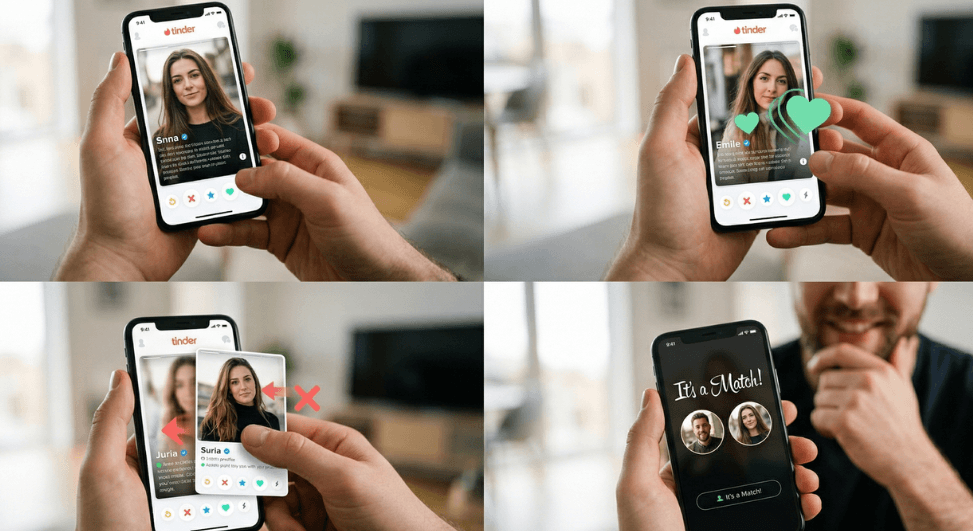
Tinder uses a swipe system where users view profiles and swipe right for interest or left to pass, and a match appears when two people swipe right on each other. The process seems quick, yet results for many men often depend on profile quality and activity patterns.
Competition between male profiles can be fairly high in many cities, and users often decide within seconds whether to continue viewing a profile. Photos tend to drive the first decision, yet bios sometimes influence whether someone feels curious enough to start a conversation.
The platform also tracks behavior. Profiles that receive likes, matches and message replies often gain stronger visibility in the swipe deck. Engagement signals frequently help determine which profiles appear more often to other users.
This means success on Tinder rarely comes down to luck alone. Men who improve photos, write clearer bios and messages confidently often see better results over time.
Tinder attempts to show profiles that are likely to create interaction, and several signals influence how often a profile appears.
These signals often include:
Profiles that consistently create interaction often receive more opportunities for matches.
Match activity often rises and falls during normal Tinder use. The platform sometimes tests profiles with new audiences, and this can cause sudden changes in match frequency.
Activity patterns influence results, too. Profiles that remain inactive for long periods sometimes receive less exposure until activity resumes.
User behavior patterns may influence placement in the swipe deck, and competition within a location often shifts throughout the day.
Fluctuating matches are common on dating apps, and understanding these patterns often reduces frustration when results vary.
A Tinder profile acts as the first introduction to potential matches, and many swipe decisions happen within seconds of viewing photos. Profiles that communicate personality quickly tend to stand out more clearly.
Photos usually determine the initial impression, yet bios often reinforce credibility and interest. A short bio offering hints about lifestyle, hobbies or humor often creates curiosity.
Profiles that display activities such as travel, sports or social events tend to signal an active life outside the app. This often encourages conversation starters naturally.
Men who treat their profile as a small personal highlight reel often see better results than those who upload random images. A cohesive profile tells a story about who you are and how you spend your time.
If you are not sure what your profile currently communicates, our Flirtist dating quiz can quickly highlight where you are strong and where small changes could increase your match rate.
It gives you focused feedback on photos, bio direction and messaging style before you start rewriting anything.
Photos create the strongest first impression on Tinder, and certain qualities tend to increase swipe interest. Consider the following characteristics when selecting images:
Strong photos rarely look staged. Profiles that show genuine moments, social environments and clear facial expressions often receive more positive attention.
A Tinder bio helps transform a profile from a basic image gallery into a small snapshot of personality. Even two or three lines often provide enough context to spark curiosity.
Many bios work best when they combine a hobby, a personality trait and a conversational hook. This structure gives matches something easy to respond to.
Examples of bio structures often include:
Short bios usually perform well since users swipe quickly, and a concise message often communicates personality more clearly than long paragraphs.
Small profile mistakes often reduce match rates without users noticing. Many of these issues relate to first impressions created by photos or bios.
Common mistakes include:
Profiles that remove these mistakes often see noticeable improvements in swipe responses.
Photo selection influences nearly every swipe decision, and the order of images plays an important role in shaping impressions. The first photo usually determines whether someone continues exploring the profile.
Strong profiles typically include a mix of image styles, each revealing something slightly different about the person. Close-up portraits highlight facial features, yet activity photos demonstrate personality and interests.
A well-structured profile often tells a subtle story. The first photo introduces the person clearly, later images show hobbies or social environments, and the final photo sometimes highlights lifestyle or travel experiences.
Profiles that create variety through images often hold attention longer during swiping.
The primary photo influences swipe decisions more than any other element of a profile. A strong first image typically includes several qualities:
The first image acts as the gateway to the rest of the profile, and many matches begin or end with this single photo.
Group photos sometimes help demonstrate a social lifestyle, yet they require careful placement within the profile. Solo photos should dominate the gallery since viewers want to identify the person quickly.
Group photos work best later in the profile where identification remains obvious. If multiple people appear in the image, viewers should still recognize the profile owner easily.
A single group image often adds social context without causing confusion, yet multiple group photos sometimes create uncertainty during swiping.
Certain photo types often reduce swipe interest or create negative impressions.
Examples include:
These photos often appear less authentic or harder to interpret, and viewers typically move on quickly during fast swiping sessions.
A Tinder bio complements photos by providing personality cues and conversation starters. Photos capture attention first, yet the bio often shapes curiosity and engagement.
Strong bios highlight interests or hobbies that reveal everyday lifestyle. A short mention of travel, music, fitness or food preferences often encourages natural conversation topics.
Generic phrases often reduce impact. Statements like “just ask” or “love to have fun” rarely create intrigue. Profiles that include specific details usually feel more engaging.
Short bios often perform well since Tinder users browse profiles quickly during swiping sessions. A concise two-sentence description usually communicates personality without overwhelming readers.
Longer bios sometimes provide deeper context, yet they work best when each sentence adds meaningful information. Profiles that maintain clarity and brevity often attract more attention.
A few well chosen lines often feel stronger than long explanations about personality.
Humor often increases attraction since it signals confidence and social awareness. A playful comment in a bio frequently makes a profile more memorable.
Humor works best when it feels conversational rather than scripted. Clear observations or light self-awareness often resonate better than elaborate jokes.
For instance, a playful line about cooking experiments or travel mishaps often invites curiosity without forcing laughter.
Swipe behavior influences profile performance more than many users realize. Tinder tracks engagement signals during swiping sessions, and selective behavior often produces stronger results.
Users who swipe right on nearly every profile often send weaker interest signals. The system may interpret this as low selectivity, and visibility sometimes declines over time.
Thoughtful swiping often improves match quality since the algorithm detects stronger alignment between profiles.
Mass swiping reduces the accuracy of engagement signals, and profiles that swipe indiscriminately often match with fewer compatible users. Lower interaction rates sometimes follow these matches.
The algorithm attempts to connect users likely to interact, and profiles generating limited engagement sometimes receive reduced exposure. Selective swiping often improves overall results.
Swiping selectively allows users to focus on profiles with shared interests or compatible lifestyles. Matches formed through genuine alignment often lead to stronger conversations.
Profiles that generate engaging conversations often create better algorithm signals, which sometimes improves visibility across the platform.
Opening messages often determine whether a match becomes a conversation or fades away quietly. Personalized messages typically perform better than generic greetings.
Referencing something from the profile often demonstrates attention and curiosity. A comment about a travel photo or hobby often feels more engaging than a simple “hey.”
A relaxed tone usually works best during opening messages. Playful curiosity often encourages replies more effectively than formal introductions.
Effective openers often fall into a few categories:
Playful observation
“Your hiking photo looks amazing. Was that taken somewhere with terrible cell service?”
Profile question
“You mentioned being a coffee enthusiast. Serious question, favorite local café?”
Humorous comment
“Your dog might have the most confident Tinder photo I’ve seen.”
Curiosity opener
“You seem like someone who knows the best weekend spots in town.”
These openers feel conversational and invite responses naturally.
Certain opening messages often reduce reply rates quickly.
Examples include:
Short personalized messages typically create stronger first impressions.
Maintaining momentum after the first message often determines whether a conversation develops into a date. Conversations flow best when both people share information and ask questions naturally.
Stories about hobbies, travel experiences or funny daily events often create engaging dialogue. Humor often adds energy to conversations when used casually.
Repetitive questions sometimes drain momentum. Conversations tend to remain interesting when both people introduce new topics gradually.
Open-ended questions often produce richer responses than yes or no prompts. Questions inviting opinions or experiences usually lead to longer conversations.
For example, asking about favorite travel destinations often produces detailed answers and follow-up discussion.
Tone often shapes attraction during conversations. Confidence, curiosity and light humor typically create stronger engagement.
Conversations often feel more natural when pacing remains relaxed rather than rushed. Responding thoughtfully often produces better dialogue than rapid texting.
Many successful conversations eventually transition away from the Tinder chat interface. Moving to another platform often creates a stronger connection and momentum.
Signals often appear when both people exchange several messages comfortably and show mutual curiosity. At this stage, a casual suggestion to continue chatting elsewhere often works well.
A relaxed approach often feels natural when suggesting another platform. For example, asking whether someone prefers texting or Instagram often keeps the conversation light.
Many users appreciate moving away from Tinder once a conversation flows easily.
Timing matters when suggesting a meeting. Conversations that include shared humor, curiosity and engagement often indicate mutual interest.
Invitations usually work best. Suggesting coffee, a walk or a casual drink often feels comfortable for first meetings.
First dates work best when expectations remain relaxed. Stress-free plans often create comfortable environments where conversation flows easily.
Coffee shops, parks or casual bars often provide easy settings for a first meeting. The goal usually involves conversation and connection rather than elaborate planning.
Many Tinder conversations fade quietly after only a few messages. Several patterns often contribute to this outcome:
Conversations often stay alive when both participants show curiosity and enthusiasm, but remember as well that you’re not the next best comedian on the scene.
AI tools increasingly support dating app users who want help improving profiles and messages. These tools often analyze tone, suggest conversation ideas and identify profile weaknesses.
Some tools generate creative opening messages when users feel stuck. Others provide feedback on bios or photo choices.
Many users who want deeper insight into their dating style often explore tools like our Flirtist dating quiz, which helps identify strengths and areas for improvement.
If you feel unsure about your profile direction or messaging style, taking our quiz, created by our team here at Flirtist, can give you clearer feedback in just a few minutes.
It often highlights small tweaks that make a real difference in match rates and reply quality.
AI assistance often helps users refine communication and experiment with different approaches.
AI tools often help craft responses that sound natural and engaging. Users sometimes paste a conversation into an assistant and receive several reply suggestions.
This approach often helps users avoid awkward phrasing or overly formal tone during conversations.
Some AI tools analyze profiles and suggest improvements to bios or photo selection. Feedback often highlights missing personality cues or unclear images.
Profiles refined through feedback often present clearer signals during swiping.
Dating apps often produce mixed experiences. Some days bring several matches, yet other days feel quiet. These fluctuations happen to many users.
Confidence tends to improve results over time since relaxed communication often feels more attractive. Users who treat Tinder as a learning experience often develop stronger messaging habits.
Several behaviors commonly reduce attraction during Tinder interactions:
Avoiding these patterns often improves overall dating success.
Many users believe paid features are necessary for visibility, yet organic improvements often produce strong results.
Strategies often include:
Profiles that combine these improvements often see gradual increases in match rates.
Users experiencing low match rates often benefit from reviewing several profile elements. Photo quality frequently acts as the primary factor influencing swipes.
Rewriting bios often helps highlight personality and interests more clearly. Adjusting swiping behavior and testing new photos often improves visibility over time.
Tinder often works best when viewed as one component of a broader dating strategy. Conversations, interactions and profile adjustments gradually build communication skills.
Users who observe which photos attract attention often refine their profiles over time. Messaging practice frequently improves confidence during conversations.
Dating apps often reward experimentation and learning, and men who refine their profiles, communication and strategy often see steady improvements in matches, conversations and dates.


 Take this 2-min test
Optimize your profile
Get better dates
Take this 2-min test
Optimize your profile
Get better dates 
Join 304,617+ happy users